If you’re looking for clear, reliable guidance on improving your pet’s health, behavior, and overall well‑being, you’re in the right place. Pet owners today want practical solutions—nutrition advice that actually works, grooming tips that make a difference, and training methods that are both effective and humane. This article delivers exactly that.
We break down the latest updates in pet care, from wellness and diet essentials to spray‑based training tools designed to support positive behavior correction. Whether you’re managing excessive barking, reinforcing boundaries, or simply aiming to strengthen daily routines, you’ll find actionable insights grounded in proven methods.
Our guidance is informed by current veterinary recommendations, professional training standards, and research in human animal bond science, ensuring every strategy prioritizes your pet’s physical and emotional health. By the end, you’ll have practical steps you can confidently apply to create a healthier, happier life for your companion.
My dog, Rufus, used to wait by the door every afternoon, somehow knowing the moment I’d turn the key. I once brushed it off as routine, but research in human animal bond science shows it runs deeper. Oxytocin, often called the “love hormone,” rises in both people and dogs during eye contact (yes, the same chemical tied to parent-infant bonding). Studies confirm this regulation lowers cortisol and boosts trust.
Shared rituals build neural pathways.
Consistent cues reduce anxiety.
Understanding this helps us respond patiently, not personally. (They’re not stubborn; they’re communicating.) This knowledge reshaped how I approach training daily. With more empathy.
An Evolutionary Partnership: How Domestication Rewired Our Brains
Understanding the deep-rooted science behind the human-animal bond can greatly enhance our interactions with pets, much like mastering the technique of How to Open Feduspray can improve your experience of using it effectively.
The Domestication Hypothesis suggests early humans and wolf ancestors didn’t just tolerate each other—they teamed up. In simple terms, co-evolution means two species influence each other’s development over time. I’m convinced this partnership reshaped both sides. Imagine prehistoric camps: less aggressive wolves linger near fires, humans share scraps, and both gain protection. It’s not unlike the original buddy-cop movie—unlikely partners, shared goals (cue the slow-burn trust montage).
However, some argue wolves were simply captured and tamed. I disagree. Evidence points to “self-domestication,” where friendlier, less fearful animals thrived near humans and passed on calmer traits. Survival of the Friendliest isn’t just catchy—it reflects natural selection favoring cooperation over conflict.
Consider three biological shifts:
- Reduced stress responses (lower cortisol spikes around humans).
- Genetic markers tied to social bonding.
- Increased tolerance for eye contact and communication cues.
Studies on genes like WBSCR17, linked to sociability in dogs, support this biological basis (vonHoldt et al., 2017). Meanwhile, human animal bond science shows our oxytocin levels rise when we interact with dogs (Nagasawa et al., 2015). That’s not sentimental fluff—that’s chemistry.
So yes, while skeptics say it’s just conditioning, I believe domestication rewired brains on both ends. We didn’t just train dogs. We grew alongside them (and honestly, we’re better for it).
The Chemistry of Connection: Oxytocin and the Neuroscience of Love

The “Love Hormone” Loop
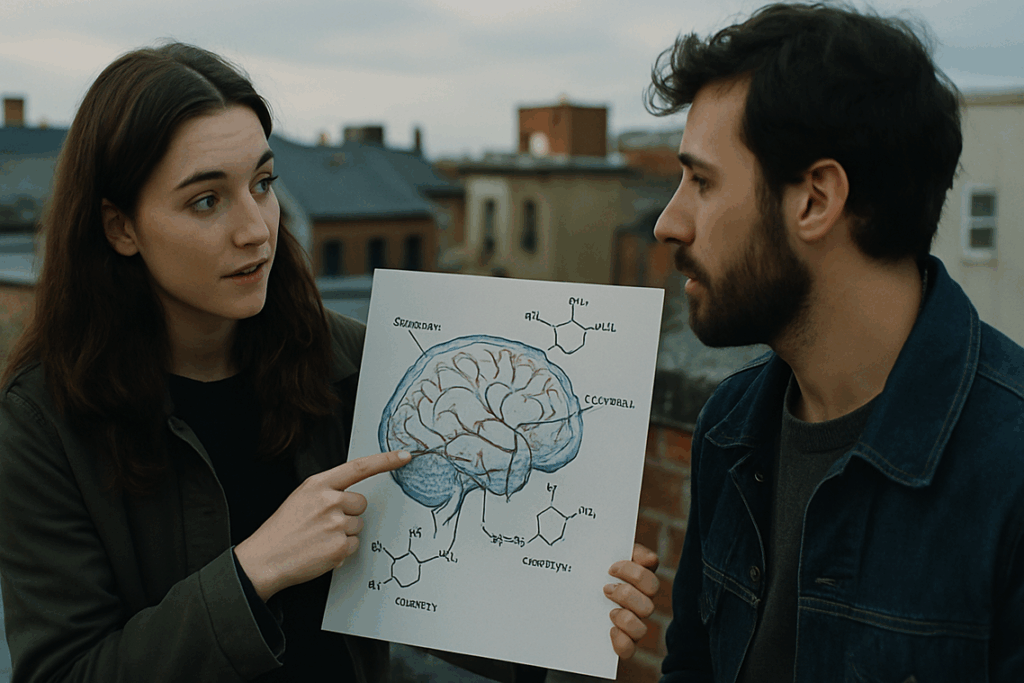
First, let’s define oxytocin. Oxytocin is a neuropeptide—a small protein-like molecule used by neurons to communicate—that plays a central role in social bonding. Often nicknamed the “love hormone,” it’s part of a feedback loop that deepens attachment.
Here’s how it works: when you and your dog lock eyes, both of your brains release oxytocin. That surge encourages more affectionate behavior—soft talking, petting, relaxed posture—which in turn triggers even more oxytocin. Researchers have documented this mutual rise in oxytocin levels in both dogs and humans during sustained gazing (Nagasawa et al., 2015). In other words, that long look across your Austin backyard isn’t random—it’s biochemical bonding in action.
Some skeptics argue this response is just food-seeking behavior dressed up as affection. However, studies show oxytocin increases even without treats present, suggesting a genuine attachment mechanism rather than simple conditioning.
Beyond Oxytocin
Meanwhile, dopamine—the brain’s reward neurotransmitter—fires during playtime. Think of a high-energy fetch session at Zilker Park; both you and your dog experience a pleasurable “reward hit.” Serotonin, a mood-stabilizing chemical, rises during slow, gentle petting, promoting calm and emotional balance.
Cross-Species Communication
Dogs read tone of voice, facial expressions, and posture with impressive accuracy. Our brains, in turn, respond to their tail wagging, ear positioning, and vocalizations. This silent exchange is central to human animal bond science, creating a two-way, non-verbal dialogue that feels almost cinematic (cue the Lassie moment).
A Prescription for Wellness: The Proven Health Benefits of Animal Companionship
Cardiovascular Health
First, let’s clarify what researchers mean by cardiovascular health: it refers to the well-being of your heart and blood vessels. Studies have consistently linked pet ownership—especially dog ownership—to lower blood pressure, reduced cholesterol, and a decreased risk of heart disease. The American Heart Association reports that dog owners, in particular, tend to engage in more regular physical activity, which supports heart health (Levine et al., 2013). In simple terms, daily walks aren’t just good for your dog—they’re medicine for you.
Some skeptics argue that it’s not the pet, but the lifestyle of the owner, that makes the difference. Fair point. However, even after adjusting for activity levels, researchers still observe stress-reducing effects tied directly to interacting with animals (NIH, 2018). Petting a dog can lower cortisol (a stress hormone) and boost oxytocin (the “bonding hormone”). That’s biology, not just sentimentality.
Mental and Emotional Support
Next, let’s unpack unconditional positive regard—a psychological term meaning acceptance without judgment. Pets offer exactly that. Caring for an animal creates structure, daily routine, and a sense of purpose (which can be grounding during anxiety or depression). According to the CDC, companionship from pets can reduce feelings of loneliness and improve overall mood. Think of it as built-in emotional support—no Wi-Fi required.
The Microbiome Connection
Finally, the microbiome refers to the trillions of microbes living in and on your body. Emerging research suggests children raised with pets develop more diverse gut bacteria, which may lower allergy and autoimmune risks (Fujimura et al., 2010). In other words, a little dirt isn’t always bad.
This growing field of human animal bond science continues to clarify why animals play such a powerful role in our well-being—whether as companions at home or as highlighted in how working dogs are trained for specialized roles.
From Science to Practice
Understanding animal psychology starts with two key systems: the reward system (how the brain releases dopamine, a “feel-good” chemical) and the stress response (the body’s fight-or-flight reaction). These aren’t abstract ideas—they shape everyday training.
Positive reinforcement works because rewards like treats or praise trigger dopamine, making behaviors more likely to repeat. Punishment, by contrast, often activates stress pathways, which can create fear or confusion (and who learns well when anxious?).
Scent and sound matter, too:
- Calming pheromone sprays and gentle vocal tones directly soothe the nervous system.
This practical approach is grounded in human animal bond science, turning research into kinder, more effective care.
Science doesn’t diminish your bond; it validates it. The feelings you have for your pet are rooted in human animal bond science, which shows shared oxytocin spikes, lowered cortisol, and synchronized heart rates (Beetz et al., 2012). Still, some argue love alone is enough and that studying brain chemistry overcomplicates things. I disagree. Understanding the why behind behavior—evolution, stress responses, learning theory—clarifies the how of training and care. After all, would you ignore medical research for a family member? When you spot stress signals early and reinforce calm behavior consistently, you strengthen trust and resilience every single day together, intentionally.
Strengthen Your Dog’s Behavior and Your Bond Starting Today
You came here looking for clear, practical ways to improve your dog’s behavior without harming the trust you’ve worked so hard to build. Now you understand how consistent training, proper spray-based tools, and guidance rooted in human animal bond science can correct unwanted behaviors while protecting your relationship.
Behavior issues aren’t just frustrating — they’re exhausting. Constant barking, jumping, chewing, or aggression can make daily life stressful and leave you wondering what you’re doing wrong. The truth is, most behavior problems stem from miscommunication, inconsistent boundaries, or a lack of structured reinforcement.
The good news? You don’t have to live in that cycle.
When you apply proven spray-based training techniques correctly and pair them with positive reinforcement, you create clarity for your dog. Clear communication builds confidence. Confidence builds calm behavior. And calm behavior strengthens your bond.
Now it’s time to take action. Start implementing a structured training routine today using safe, vet-recommended spray tools designed for humane correction. Join thousands of pet owners who have transformed chaotic homes into peaceful ones with science-backed methods that actually work.
Your dog wants guidance. Give it consistently, start today, and enjoy the well-behaved companion you know they can be.

 There is a specific skill involved in explaining something clearly — one that is completely separate from actually knowing the subject. Alissa Hastingsellens has both. They has spent years working with spray-based training tools in a hands-on capacity, and an equal amount of time figuring out how to translate that experience into writing that people with different backgrounds can actually absorb and use.
Alissa tends to approach complex subjects — Spray-Based Training Tools, Pet Nutrition and Grooming Tips, Behavior Correction Techniques being good examples — by starting with what the reader already knows, then building outward from there rather than dropping them in the deep end. It sounds like a small thing. In practice it makes a significant difference in whether someone finishes the article or abandons it halfway through. They is also good at knowing when to stop — a surprisingly underrated skill. Some writers bury useful information under so many caveats and qualifications that the point disappears. Alissa knows where the point is and gets there without too many detours.
The practical effect of all this is that people who read Alissa's work tend to come away actually capable of doing something with it. Not just vaguely informed — actually capable. For a writer working in spray-based training tools, that is probably the best possible outcome, and it's the standard Alissa holds they's own work to.
There is a specific skill involved in explaining something clearly — one that is completely separate from actually knowing the subject. Alissa Hastingsellens has both. They has spent years working with spray-based training tools in a hands-on capacity, and an equal amount of time figuring out how to translate that experience into writing that people with different backgrounds can actually absorb and use.
Alissa tends to approach complex subjects — Spray-Based Training Tools, Pet Nutrition and Grooming Tips, Behavior Correction Techniques being good examples — by starting with what the reader already knows, then building outward from there rather than dropping them in the deep end. It sounds like a small thing. In practice it makes a significant difference in whether someone finishes the article or abandons it halfway through. They is also good at knowing when to stop — a surprisingly underrated skill. Some writers bury useful information under so many caveats and qualifications that the point disappears. Alissa knows where the point is and gets there without too many detours.
The practical effect of all this is that people who read Alissa's work tend to come away actually capable of doing something with it. Not just vaguely informed — actually capable. For a writer working in spray-based training tools, that is probably the best possible outcome, and it's the standard Alissa holds they's own work to.